
What Is Blockchain? How It Works, Uses, and Benefits
Learn what blockchain is, how it works, and why it matters. This guide explains blockchain technology, key features, common uses, benefits, and challenges in simple terms.
Introduction
Blockchain is a term that many people have heard in recent years, especially in connection with Bitcoin, cryptocurrencies, and other forms of digital finance. It is often mentioned in discussions about the future of technology, online security, and even industries far beyond finance. Because it is usually explained with technical language, blockchain can seem confusing or intimidating at first. However, the basic idea is much easier to understand than many people expect. At its core, blockchain is simply a new way of recording, storing, and sharing information securely and transparently. Once you break the concept down into smaller parts, it becomes much clearer why blockchain has attracted so much attention and why it is considered one of the most important technological developments of the digital age.
1. So, What is Blockchain Anyway?
At its most basic, blockchain is just a decentralized ledger (fancy term for a record-keeping system) that keeps track of data across multiple computers in a network. Unlike traditional ledgers that a single entity (like a bank) controls, blockchain is open and shared between multiple parties. It’s not just about cryptocurrency; the technology behind blockchain has tons of potential uses across industries.
Key features of blockchain include:
Decentralization: No single authority controls it. It’s managed by a network of computers (called nodes) that all hold the same copy of the blockchain.
Transparency: Everyone in the network can see the transactions, making it super transparent.
Security: It uses cryptography to secure data and make sure it can’t be tampered with once it’s added to the chain.
Immutability: Once something’s recorded on the blockchain, you can’t change it. Ever. It’s locked in, forever.
2. How Does Blockchain Work?
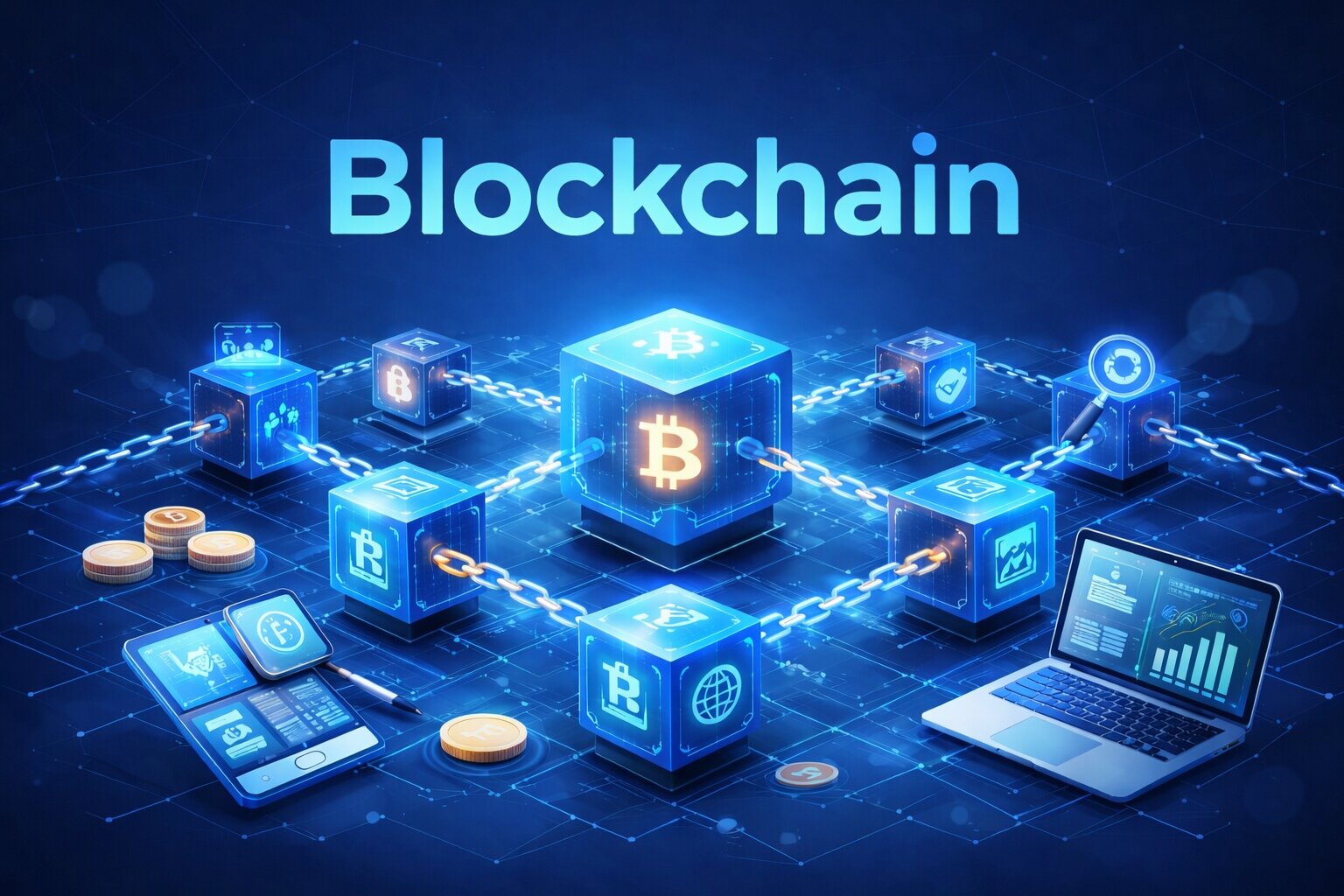
Okay, this is where it starts to get interesting. When you make a transaction (like sending Bitcoin to a friend), it’s grouped with other transactions into a block. This block then gets linked to the previous block, creating a chain, hence the name “blockchain.” It’s kind of like adding a new page to a digital notebook, but once a page is written, you can’t erase it.
Here’s how it all goes down:
Step 1: You make a transaction, say, you send some crypto to your buddy.
Step 2: Your transaction gets verified by other computers in the network. They check if it’s legit (not double-spending, etc.).
Step 3: Once validated, your transaction is added to a new block.
Step 4: The new block is then linked to the previous block; this is what forms the chain.
Step 5: The whole process is decentralized; there’s no central server, just a group of computers that all update their records together.
It’s like a digital group project, but everyone’s doing their part, and no one can mess with the final result.
3. Blockchain vs. Traditional Databases
So, why is blockchain so different from your usual database (like the ones banks and tech companies use)? The main difference comes down to centralization. Let’s compare:
Feature | Blockchain | Traditional Database |
Control | Decentralized (no central authority) | Centralized (controlled by a single entity) |
Transparency | Transparent to all users in the network | Limited access to data (controlled by admin) |
Security | Secure, tamper-proof, and cryptographically protected | Vulnerable to hacks and fraud if compromised |
Immutability | Data cannot be changed once added to the blockchain | Data can be altered or deleted |
In short, blockchain is all about being open and secure. Traditional databases rely on a central authority to keep everything in check, while blockchain is decentralized and distributed, making it much harder to tamper with.
4. Common Uses of Blockchain Technology
You’ve probably heard of Bitcoin, but blockchain isn’t just for digital currencies. The tech behind blockchain has some serious potential across a ton of industries. Here are a few ways it's being used:
1. Cryptocurrencies
The most obvious use of blockchain is in the world of cryptocurrencies. Bitcoin and Ethereum both rely on blockchain to operate. Cryptocurrencies are traded on a peer-to-peer network that’s powered by blockchain’s decentralized structure, making it more secure and transparent than traditional payment methods.
2. Supply Chain Management
Blockchain is used to track goods in supply chains, ensuring that products are authentic and haven’t been tampered with during transit. Companies can use blockchain to keep track of their products in a transparent and secure way, from manufacturing to delivery.
3. Healthcare
In healthcare, blockchain can be used to store patient records securely. Blockchain allows doctors, hospitals, and patients to share and access health data easily and securely, while ensuring that personal information is protected from fraud.
4. Voting Systems
Blockchain can be used to create secure and transparent voting systems. This could help eliminate the risk of fraudulent voting and ensure the integrity of the democratic process.
5. Smart Contracts
A smart contract is a self-executing contract with the terms directly written into code. These contracts are automatically executed when predefined conditions are met, reducing the need for middlemen like lawyers or notaries.
6. NFTs (Non-Fungible Tokens)
Blockchain is also the foundation of NFTs, unique digital assets that represent ownership of specific items like art, music, or collectibles. The blockchain proves that the NFT is the original asset and tracks its ownership.
5. Benefits of Blockchain Technology
1. Security
Blockchain is inherently secure because of its decentralized nature and the use of cryptography. Once data is written to the blockchain, it’s nearly impossible to alter or tamper with, making it more secure than traditional methods.
2. Transparency
All transactions are visible to everyone in the blockchain network, ensuring complete transparency. While the identity of the participants is pseudonymous, the transaction data is open for verification by anyone.
3. Cost Efficiency
By removing intermediaries (like banks or payment processors), blockchain can reduce transaction fees and costs associated with traditional systems, making it more affordable for businesses and consumers alike.
4. Speed
Blockchain transactions can be processed much faster, especially for international transfers, which typically take several days in traditional finance. With blockchain, these transfers can be completed in minutes or even seconds.
5. Decentralization
Blockchain is not controlled by any single entity. This removes the risk of corruption or failure that comes with centralized systems. Everyone has a say in the network, and the network operates independently.
6. Challenges and Limitations of Blockchain
While blockchain is highly promising, it does come with its own set of challenges:
Scalability: As the blockchain network grows, the number of transactions can overwhelm the system. Improvements are needed to ensure scalability without compromising speed.
Energy Consumption: Blockchain networks, especially Bitcoin, require substantial computing power, leading to high energy consumption.
Regulation: Blockchain’s decentralized nature makes it difficult to regulate, creating potential legal issues for governments trying to monitor or tax transactions.
7. How to Get Involved with Blockchain
If you want to explore blockchain technology, here are a few ways to get involved:
Invest in Cryptocurrencies: The easiest way to start is by investing in cryptocurrencies like Bitcoin or Ethereum on reliable exchanges like Binance or Coinbase.
Learn Blockchain Development: If you're more tech-savvy, you can learn blockchain development and become part of the growing community of blockchain developers.
Stay Informed: Follow blogs, forums, and news outlets to keep up with the latest blockchain trends and use cases.
Conclusion
Blockchain is a transformational technology that is shaping the future of industries worldwide. From cryptocurrencies to healthcare to supply chain management, blockchain is providing secure, transparent, and cost-efficient solutions to problems that have long existed in traditional systems. With its immutable ledger, decentralization, and security, blockchain has the potential to disrupt industries across the globe.